Rehab needs a number, not a feeling
Rebuilding strength in an injured extremity is normally judged by feel: a patient or therapist guessing whether a grip is "getting stronger" without much to measure against. The brief for this project was to give that process an actual metric: how much pressure is a finger able to exert right now, tracked consistently enough to show progress session to session.
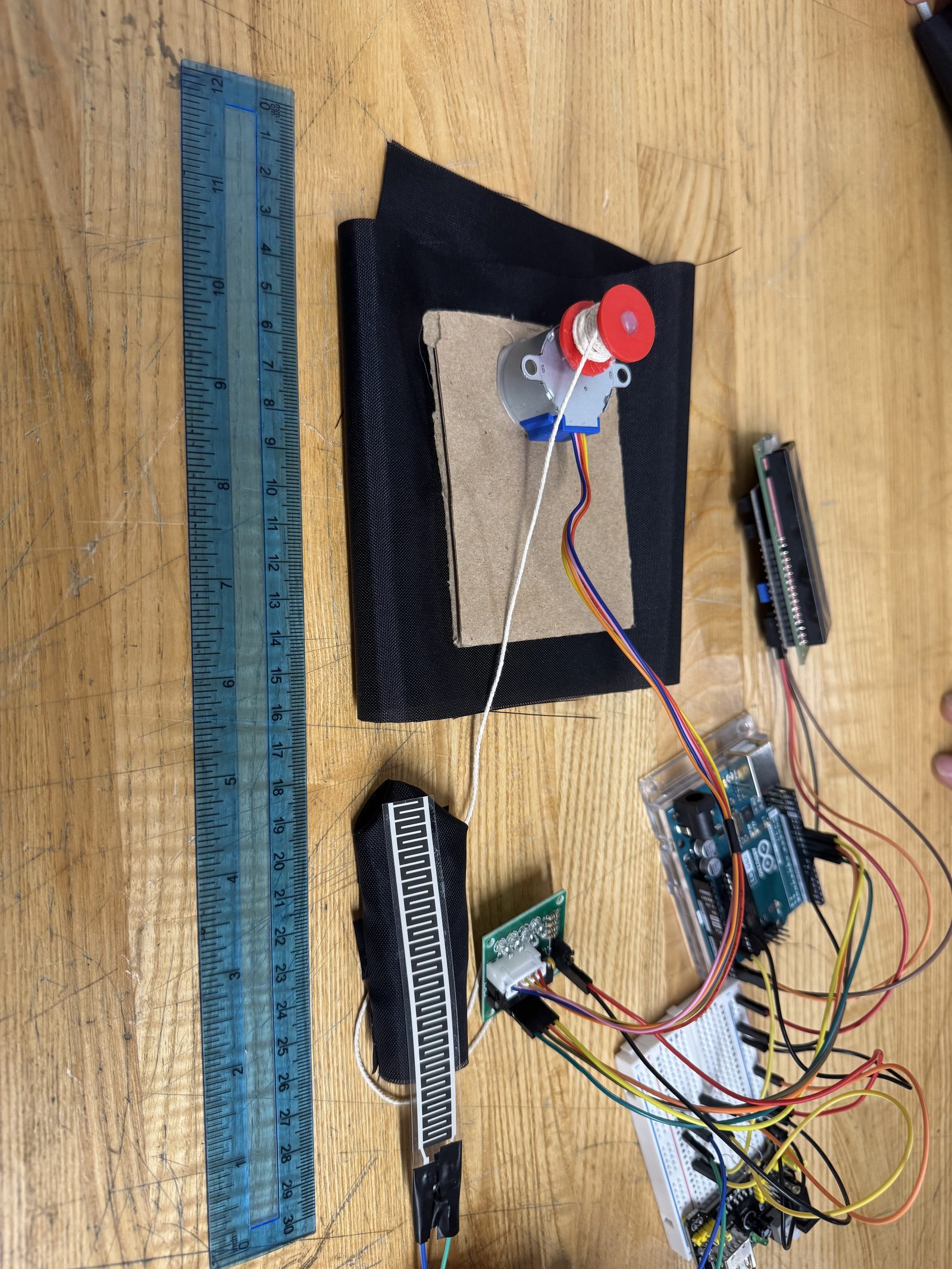
How it works
A flex sensor is worn directly on the patient's finger, bending along with it as the patient presses or grips. That bend changes the sensor's resistance, which the microcontroller reads and converts into a live pressure value shown on an LCD, giving immediate, legible feedback on how much force the finger is actually producing during a rehab exercise, rather than relying on subjective effort alone.
My role
This was a group project for ME 571; my contribution centered on the sensor circuit and the wearable mounting: getting the flex sensor positioned and secured so its bend tracked the finger's actual joint motion reliably, and wiring it through to the LCD readout for a clean, real-time display.